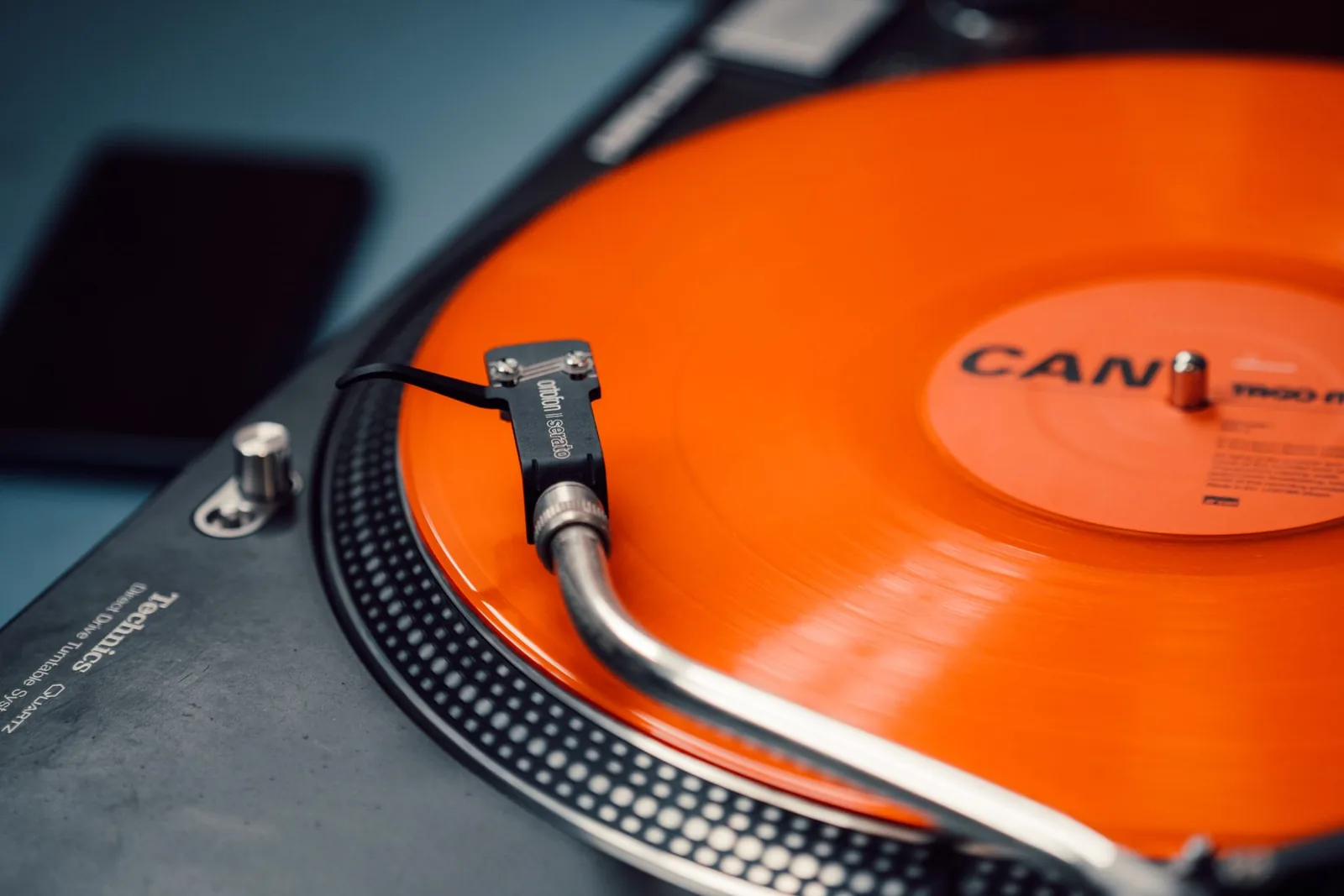
A customer walks in, spots a blood-red record in the crate, slides it out of the sleeve and lights up. "It's colored!" That scene plays out every week in our shop in Saint-Pierre, on Réunion Island. Colored vinyl fascinates people, and picture discs even more. But behind the shop-window effect there is a real question: are you paying for music or for a piece of decor? Will it be worth anything in ten years? And that old line, "colored vinyl sounds worse": fact or myth? Here is a record dealer's straight answer.
What is a picture disc?
A picture disc is a vinyl record that shows an image across its whole playing surface. The artwork is printed on a sheet, sandwiched between two thin layers of clear PVC, and the grooves are pressed into that clear PVC. Colored vinyl is something else: an ordinary record whose material is tinted all the way through. Both play on any turntable, at the same speed as a black record.
How colored vinyl and picture discs are made
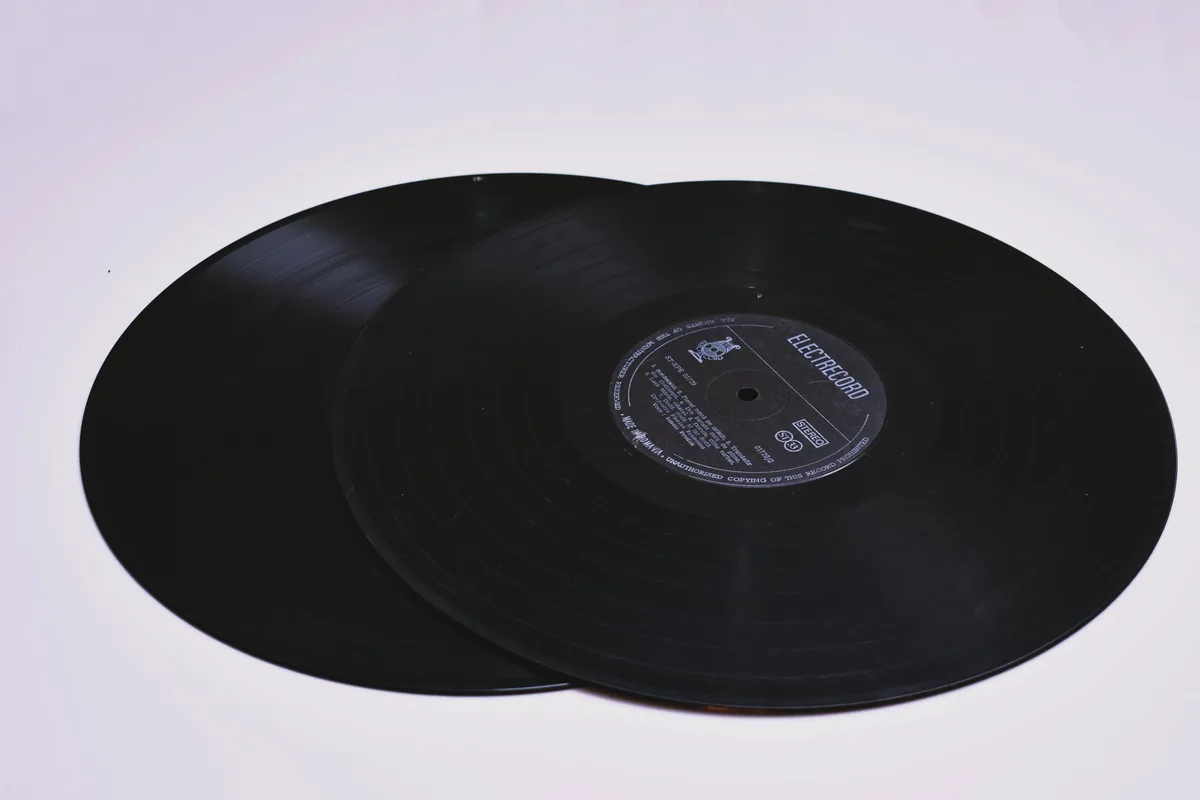
A standard black record is PVC with carbon black added. That pigment is not there for looks: it makes the material stiffer and more stable, and slightly conductive, which helps drain static electricity. To get a color, the carbon black is replaced by other pigments, or clear PVC is tinted. The pressing itself does not change: a heated puck of vinyl is squeezed between two stampers.
A picture disc plays in another league. It is not tinted material, it is a sandwich. A printed sheet carrying the image sits in the middle, covered by two thin layers of clear PVC that carry the grooves. The picture you admire sits just under the playing surface: protected, but locked inside a more complex structure than a regular record.
Does colored vinyl actually sound different?
It is the question we hear most often at the counter, and the honest answer comes in two parts.
For simply tinted vinyl (a translucent red, a blue, a splatter), the difference from black is now negligible in the vast majority of cases. Twenty or thirty years ago, some pigments gave a less even material and slightly more surface noise. Modern plants have largely fixed that. On a well-made recent pressing, nobody will hear the difference between black and colored.
Picture discs are another story. The sandwich structure makes the playing surface less even, and the result is often a slightly more audible background hiss, especially in quiet passages. It is not a disaster, and many play very well, but if you want the best possible sound for an album you love, a picture disc is not the format to pick. It is an object to look at as much as to listen to.
What gains value, and what never will
This is the heart of the matter for collectors. A colored record is not valuable "because it is colored". It is valuable because it is rare, in demand, and tied to a record that matters. Color alone does not push the price up. A combination of factors does.
- The actual pressing run: a color pressed in 300 numbered copies has nothing in common with the same color pressed in 20,000. The first can become impossible to find, the second will stay a common record forever.
- Demand for the artist: a limited edition of a cult album resells; a limited edition of a record nobody looks for stays on the seller's hands, color or not.
- Condition and completeness: sleeve, insert, numbering, original hype sticker. A collectible loses value fast as soon as one element is missing.
On the other hand, be wary of "anniversary" reissues pressed by the tens of thousands in a pretty color. They sell well on release, then flood the second-hand market and often lose half their price within two years. The color was a sales pitch, not an investment. To judge a price properly, nothing beats reading the clues on the record itself: our guide on how to identify a vinyl pressing from its label and matrix shows you how.
How to spot a genuine limited edition
"Limited" is the most overused word in records. On a sleeve it means nothing until a number comes with it. A few reflexes before you reach for your card:
- Look for the stated run: "limited to 500 copies" is information; "limited edition" on its own is not.
- Hand numbering: a stamped or handwritten number (say 142/500) is a real sign of a short run. Printed serial numbering, much less so.
- Store-exclusive colors: some variants are pressed only for one shop or platform. They are often the most sought-after later, because they really are restricted.
- The original pressing, not the repress: cult colored editions are sometimes reproduced in later runs. The value stays with the first one.
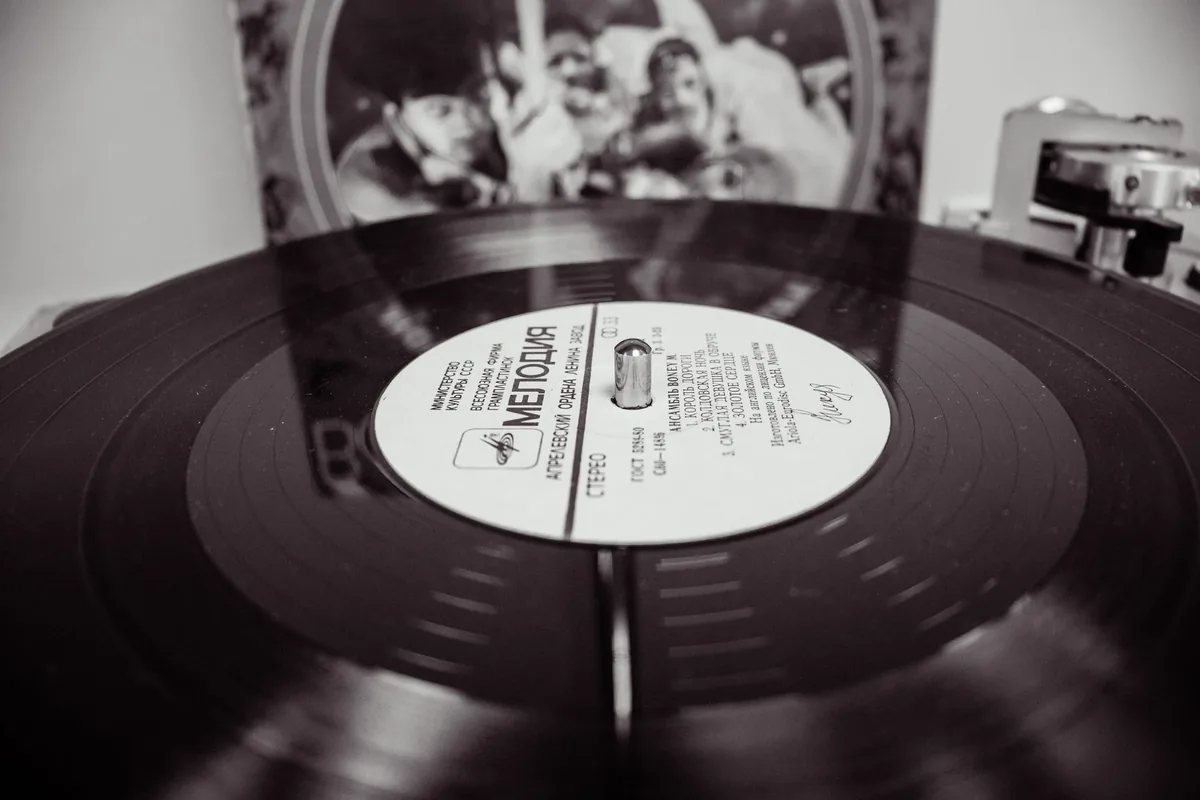
Above all, one simple rule: buy a record because you want to hear it and look at it, not because you are betting on its resale. Speculating on colored vinyl disappoints more often than it pays. The pleasure of pulling a turquoise splatter out of its sleeve on a Sunday morning, though, never loses its value.
Looking for a colored pressing or a picture disc?
Colored editions and picture discs regularly turn up in our arrivals, sometimes short runs that are hard to find elsewhere. Our whole stock is listed on Discogs and we ship worldwide. Hunting for a specific edition? Tell us what you are after and we will keep an eye out for you.
Browse our Discogs shop